An HMRC compliance check is a routine review of your tax records — not an accusation — and most are resolved quickly when you respond promptly with clear documentation.
If they contact you about an HMRC compliance check, it can honestly feel worrying.
Key Takeaways
- An HMRC compliance check is a routine review to confirm your tax returns are accurate, not an accusation of wrongdoing.
- HMRC checks are often triggered by discrepancies, significant changes in figures, unusual claims, late filings, or random selection.
- HMRC will always contact you first with a compliance check letter explaining what tax is being reviewed and what information is needed.
- The process follows clear steps: notification, information request, review, possible follow-up, and a final decision.
- Most compliance checks are resolved quickly, especially when you respond promptly and provide clear records.
- If HMRC finds an error, you’ll be told how to correct it and may need to pay additional tax and interest, but penalties are not automatic.
These checks don’t always mean there’s a problem. Here’s how the compliance check process works and what to expect from start to finish!
Table of contents
- 1. What does an HMRC compliance check mean?
- 2. What triggers an HMRC compliance check?
- 3. What happens when HMRC contacts you?
- 4. HMRC compliance check: step-by-step
- 5. How long is a compliance check?
- 6. What happens if HMRC finds an error?
- 7. What to do if you disagree with the outcome?
- 8. Reviews and appeals for different types of tax
- 9. How Alternative Dispute Resolution (ADR) works
- 10. How to reduce the risk of a compliance check
- 11. Keep your tax compliance with WallsMan Creative
1. What does an HMRC compliance check mean?
An HMRC compliance check is simply a review of your tax affairs to make sure you’ve paid the right amount of tax and claimed the right reliefs or allowances. It’s part of normal tax compliance activity, and thousands of individuals and businesses go through it every year.
Most checks are routine or triggered by small discrepancies, not by suspicion of tax evasion or tax avoidance.
During a check, HMRC may ask for documents or explanations about your income, expenses, or VAT returns. If everything adds up, the process closes quickly. If they find errors, you’ll be told clearly what needs to be corrected and if any additional tax or interest is due.
An HMRC compliance check is – first and foremost – about accuracy, not accusation.
2. What triggers an HMRC compliance check?
HMRC opens a compliance check when they want to confirm that your tax return is correct.
Sometimes it’s completely random; other times it’s because something in your figures stands out. It doesn’t always mean they think you’ve done anything wrong. Often, it’s just a quick way to double-check details.
Here are some of the most common reasons HMRC may initiate a check:
- Discrepancies in your tax return: when the numbers don’t match information HMRC already holds.
- Significant changes in income or expenses: especially compared to previous years or other businesses in your sector.
- Late or missing submissions: such as a self assessment tax return filed after the deadline.
- Unusual claims or tax reliefs: for example, higher-than-average expense deductions.
- Random selection: HMRC uses random sampling to keep the tax compliance process fair and consistent.
- Data from third parties: such as banks, employers, or online platforms that report income figures.
If you’ve kept clear records and filed your tax return on time, there’s usually nothing to worry about.
3. What happens when HMRC contacts you?
If you’re selected for a compliance check, HMRC will always contact you first.
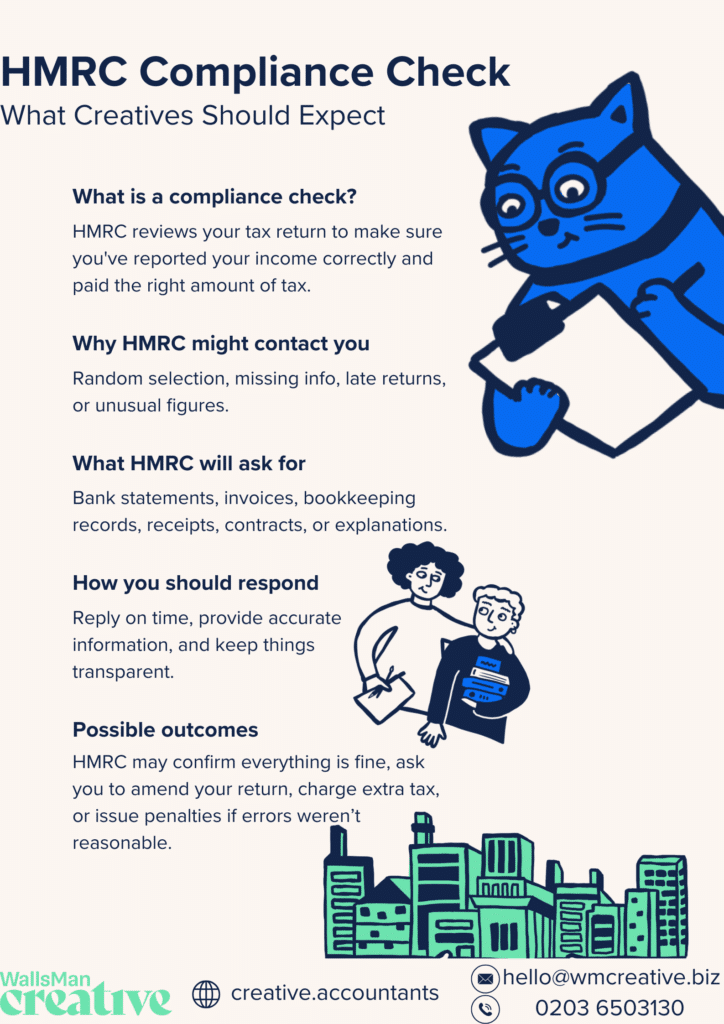
You’ll either receive a compliance check letter explaining what’s being reviewed and what information you need to provide, or follow up with you by phone or email. Such requests for personal details or payments should always be treated with caution, so you avoid HMRC phishing emails and HMRC scam calls.
If you work together with an accountant, HMRC will contact them instead.
What does the compliance check letter include?
Your letter will usually outline:
- Type of tax being reviewed: Income Tax, VAT, or Corporation Tax.
- The tax year being checked.
- Reason for the enquiry: sometimes it’s routine, other times it’s about a specific item on your return.
- Documents or records they want to see.
- A deadline for replying or sending the information.
How HMRC might carry out the check
Depending on your situation, HMRC may:
- Ask you to send records electronically or by post.
- Request a meeting or phone call to go through your figures.
- Ask to visit your business premises (this is more common for VAT or PAYE checks).
| Creative Tip You can request written contact. HMRC will consider (and often respect) your preference, but they might still require a visit or meeting where the law demands it – usually during specific investigations. |
How to deal with HMRC communication?
- Read the letter carefully. It tells you exactly what HMRC needs and by when.
- Respond quickly and clearly. The sooner you reply, the sooner the check can be completed.
- Don’t ignore it. Silence will only make the process longer or more formal.
- Involve your accountant or adviser. They can contact HMRC on your behalf and make sure your response is complete.
If you’re unsure about what HMRC is asking for, it’s completely fine to contact HMRC and ask for clarification. Alternatively, you could let your adviser do it for you.
It’s easier to get through an HMRC investigation with the right guidance. Let’s make sure you’re in good hands:

4. HMRC compliance check: step-by-step
An HMRC investigation follows a clear process.
Here’s how it usually unfolds:
- HMRC notifies you: You’ll usually receive a compliance check letter explaining which tax area is being reviewed. The letter outlines what information HMRC needs and gives a deadline for responding.
- You or your accountant send the requested information: This could include invoices, bank statements, receipts, payroll records, or explanations for specific figures. If something’s unclear, you can ask HMRC for clarification before sending your documents.
- HMRC reviews your records: The compliance officer compares your records with your filed return. They could spot small discrepancies or confirm that everything matches perfectly.
- HMRC may contact you for a meeting or call: If they need more context, they might arrange a meeting, call, or even a visit to your business.
- HMRC keeps you updated throughout the check: Officers must act professionally, respectfully, and with transparency. You should be told if there are any delays or if HMRC is waiting for more information from you.
- You receive a decision letter: Once the review is complete, HMRC writes to confirm the outcome.
- You get the chance to respond: If you disagree with the decision, you can provide more information, ask for a review, or appeal. HMRC explains these options clearly in the decision letter.
A compliance check is a two-way process: HMRC checks your figures, but they also listen to your explanations. Staying cooperative and organised helps keep everything simple and quick.
5. How long is a compliance check?
The length of a compliance check depends on how complex your tax situation is and how quickly you respond.
Simple checks can finish in a few weeks. Detailed ones can take a few months.
You can usually shorten the process by sending information promptly, keeping your records clear, and replying to HMRC on time. The more cooperative you are, the faster HMRC can close the compliance check.
6. What happens if HMRC finds an error?
If HMRC finds that you’ve underpaid tax, they’ll explain what’s wrong and how to put it right. You may have to pay additional tax, plus interest from the date the tax was due.
In some cases, an HMRC penalty might apply… but not always! HMRC looks at how the mistake happened and how you respond.
There are two types of disclosure:
- Unprompted (voluntary) disclosure: you tell HMRC about an error before they discover it. This can reduce the penalty or remove it completely.
- Prompted disclosure: HMRC finds the issue first. The penalty can be higher, but you can still lower it by cooperating.
If you’ve taken reasonable care (like keeping proper records and using an accountant or adviser), you usually won’t be fined.
HMRC encourages openness. The best way to keep penalties low is through telling, helping, and giving:
- Telling HMRC about the issue quickly
- Helping them understand what happened
- Giving the records they need to calculate the right amount
If you don’t agree with HMRC’s decision, you have the right to challenge it! In this case, you have to provide new information, request a review, or make a formal appeal – usually in 30 days.
7. What to do if you disagree with the outcome?
When HMRC finishes a compliance check, they’ll send you a decision letter explaining what they found and how they reached that conclusion. If you disagree with the outcome, you have options. And strict timelines to follow.
The key point: you’re not stuck with HMRC’s first decision. There’s always a process to review, explain, and appeal if something feels wrong.
Appeal the HMRC investigation within 30 days
You must tell HMRC within 30 days if you want to appeal their decision. You can write directly, or your accountant or adviser can do it for you. In your appeal, explain why you think the decision is wrong and include any evidence HMRC might have missed.
Ask for a statutory review
If the decision doesn’t change, you can request a statutory review. This means a different HMRC officer, who wasn’t involved in your case, will take a fresh and impartial look. Reviews usually take around 45 days and often resolve things quickly.
Appeal to a tax tribunal
If you still disagree, you can take your case to an independent tax tribunal. It’s a more formal step, but it gives you a completely neutral hearing.
Throughout this process, you can keep sending new information or corrections. HMRC will tell you if this changes their decision. If not, they’ll explain why.
8. Reviews and appeals for different types of tax
The appeals process works slightly differently depending on the type of tax involved. HMRC separates cases into direct and indirect taxes. The principle is the same: you have a fair chance to challenge any decision.
Direct taxes
Includes: Income Tax, PAYE, Capital Gains Tax, and Corporation Tax.
If you disagree with an HMRC decision about any of these, you can appeal within 30 days of the date on the letter.
Your letter should:
- Explain why you disagree with HMRC’s view.
- Include any supporting information or records.
- Mention if you believe HMRC missed something.
Once they’ve reviewed it, HMRC will write back. If the outcome doesn’t change, you can ask for a statutory review – an impartial recheck usually completed within 45 days. If you still disagree, you can then appeal to a tax tribunal.
Indirect taxes
Includes: VAT, Customs Duty, Excise Duties, and Environmental Taxes.
For these, HMRC automatically offers you a statutory review in the decision letter. You can accept this review or go straight to a tax tribunal – but you must decide within 30 days.
If you need more time to make that choice, you can ask HMRC for an extension before the deadline.
The review officer will take an independent look at your case and may ask for extra details before giving one of three outcomes:
- The decision is upheld (it stands).
- The decision is varied (changed).
- The decision is cancelled (found to be wrong).
If you’re still unhappy, you can then appeal to a tax tribunal once the review ends or the review deadline passes.
9. How Alternative Dispute Resolution (ADR) works
If you disagree with an HMRC decision during a compliance check, you don’t have to jump straight into an appeal or tribunal. You can ask for Alternative Dispute Resolution (ADR).
What is that?
A more collaborative way to deal with HMRC.
ADR brings in a neutral HMRC mediator, someone who hasn’t been involved in your case, to help both sides talk through the issues. The mediator won’t make a decision or take over your case: their role is to keep the discussion fair, focused, and productive.
- You can apply at any time – even before HMRC makes a final decision.
- You apply online via GOV.UK, and HMRC will reply within 30 days to confirm if your case is suitable.
- If accepted, you’ll usually have a meeting or video call with:
- You (and your accountant or adviser)
- Members of HMRC’s compliance team
- The mediator
- Before the meeting, both sides share written summaries of the dispute so everyone’s clear on the issues.
- The discussion takes place, usually in a single day. The mediator helps identify any missing information or misunderstandings.
- Afterwards, the mediator writes a short summary of the outcome. If you reach an agreement, HMRC updates your case. If not, you can still go ahead with a review or appeal. ADR doesn’t affect your rights.
| Creative Tip ADR often saves time, money, and stress. It’s a good option when you want to resolve things quickly and keep communication constructive. |
10. How to reduce the risk of a compliance check
You can’t completely avoid being selected for a compliance check. Still, there are simple ways to reduce the risk and keep your tax affairs in good order.
Follow these steps:
- Keep your records organised: save invoices, receipts, and statements for each tax year.
- File your tax returns on time: late or missing submissions are one of the easiest ways to trigger a check.
- Declare all sources of income: HMRC uses data from banks, platforms, and employers – everything must match.
- Check your numbers carefully: make sure your tax return is accurate and your figures add up.
- Explain any major changes: if your income or expenses have shifted significantly compared to previous years, include a short note when filing.
- Seek professional advice: an accountant or tax adviser can spot small errors and help keep your reporting fully compliant.
11. Keep your tax compliance with WallsMan Creative
If you’ve received a compliance check letter or you just want to be sure your tax reporting is watertight, it helps to have someone who understands both the numbers and the creative world you work in.
And you know what? WallsMan Creative is just like that!
We work exclusively with the creative sectors, and that’s exactly why we know how to keep your compliance with HMRC. We offer a free consultation call for our new clients to see if we can help you.
Book your slot here: