Key Takeaways
- Corporation Tax is charged at 19% on company profits of £50,000 or less under small profits rate.
- If your company profits fall between £50,000 and £250,000, marginal rate applies, meaning the effective tax rate gradually increases from 19% up to 26.5%.
- Companies with profits of £250,000 or more pay Corporation Tax at the main rate of 25%.
- Corporation Tax is calculated on taxable profits after allowable business expenses (as software, equipment, professional fees, and use of home) are deducted.
- Your Corporation Tax bill is usually due 9 months and 1 day after the end of your accounting period, even if your accounts are filed later.
- You must submit a Company Tax Return (CT600) and statutory accounts to HMRC every year, even if your company makes a loss or owes 0% tax.
Here’s the official explanation from HMRC:
Table of contents
- 1. Who has to pay corporation tax?
- 2. What counts as a profit?
- 3. Corporation tax bill differences: UK vs. Overseas
- 4. How to register for corporation tax with HMRC in 4 steps
- 5. How to pay Corporation Tax (CT600)
- 6. Corporation tax deadlines & penalties
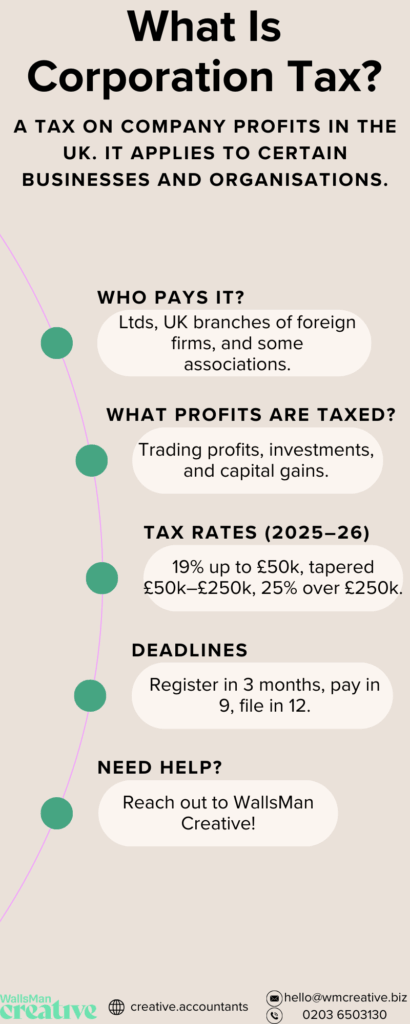
- 7. Corporation tax rate in 2025/26
- 8. Pay your corporation tax bill with WallsMan Creative
1. Who has to pay corporation tax?
Corporation tax isn’t just for big companies. You’ll need to pay it if you run:
- A limited company (Ltd)
- A public limited company (PLC)
- A foreign company with a branch or office in the UK
- Certain clubs, co-operatives or community groups that make a surplus
Corporation tax is likely to apply if your organisation is making taxable profits and it’s formally set up as a company or association.
2. What counts as a profit?
Corporation tax applies to more than just money earned from selling products or services.
Profits include:
- Trading profits: income from your core business activities
- Investment income: things like interest, dividends or rental income
- Capital gains (chargeable gains): profits made from selling assets such as property, shares, or equipment
Together, these form the total taxable profits on which corporation tax is calculated.
You can work out your corporation tax with guidance from HRMC.
3. Corporation tax bill differences: UK vs. Overseas
Where your company is based affects how much of your profit is taxed.
| Company location | What you pay tax on |
|---|---|
| Based in the UK | All taxable profits, including those made abroad |
| Based outside the UK (with UK branch/office) | Only profits from UK activities |
So if you’re running a UK company, overseas earnings are still caught by corporation tax. But if you’re an overseas business with just a UK presence, only the UK slice of profits is taxed.
Say your UK-based company makes £150,000 in profit. Corporation tax applies to the whole amount, worldwide:
- First £50,000 taxed at 19% = £9,500
- Remaining £100,000 falls into the marginal band. Effective tax here is just under 25%, thanks to Marginal Relief.
- The blended effective rate ends up a little above 22%.
Now let’s say you’re a foreign company with a UK branch. If the branch earns £300,000 but only £150,000 is earned from UK activity, only that £150,000 from UK activity is taxed under the same rates.
4. How to register for corporation tax with HMRC in 4 steps
You must register for corporation tax within 3 months of starting business activity. Here’s how to register for corporation tax with HMRC.
How to register for Corporation Tax (CT)
- Set up your business
Most companies register with Companies House first.
Independent associations (like clubs or co-ops) need to write directly to HMRC. - Access your business tax account
You’ll get a Unique Taxpayer Reference (UTR) from HMRC.
Use it to sign in and complete the registration online. - Confirm your details
Company name and number
Start date of trading
Accounting period dates - Submit your registration
Once registered, HMRC will expect your corporation tax return each year.
5. How to pay Corporation Tax (CT600)
UK limited companies must pay their Corporation Tax to HMRC by 9 months and 1 day after the end of their accounting period.
You can do this online through your HMRC Business Tax Account or directly via the GOV.UK payment service.
To make a payment you’ll need your 17-character Corporation Tax payment reference number, which ensures HMRC correctly matches the payment to your company’s tax period.
Common online payment methods include:
- Direct Debit
- bank transfer (Faster Payments, BACS, CHAPS), or
- paying by a debit/corporate credit card.
Missing the deadline can lead to interest and penalties from HMRC. This is particularly relevant when considering limited companies for creatives, where profits can be retained and planned.
Note: If you're weighing up whether to incorporate, our sole trader vs limited company calculator models the difference in tax paid under each structure, including the corporation tax impact.
6. Corporation tax deadlines & penalties
Once you’re registered, there are two key responsibilities: filing your return and paying the tax.
- File your Company Tax Return
- Must be submitted within 12 months of the end of your accounting period.
- You must file even if you made a loss or no tax is due.
- Pay your Corporation Tax
- Payment is due 9 months and 1 day after the end of your accounting period.
- This deadline comes before the filing deadline.
- Penalties
- Late filing or payment can trigger automatic penalties and interest from HMRC.
Make sure to check out all the other tax deadlines on our blog. This is particularly relevant when considering the benefits of an Ltd for creatives, where profits can be retained and planned.
7. Corporation tax rate in 2025/26
The main rate of corporation tax in the UK is set by the government and can change depending on the financial year.
| Profit band | Corporation tax rate (2025/26) |
|---|---|
| Up to £50,000 | 19% |
| £50,001 to £250,000 | 19% – 26.5% |
| Over £250,000 | 25% |
Because the rate can change, it’s always best to check the latest figures on GOV.UK before working out your tax bill.
8. Pay your corporation tax bill with WallsMan Creative
Running a creative business means your energy should go into the work you love, not wrestling with tax deadlines. Corporation tax is just one piece of the admin puzzle – but it’s one that can trip you up if you miss the details.
At WallsMan Creative, we help creative businesses in the UK stay compliant, keep accounts in order, and free up time to focus on growth.